
Service
Countertops That Fit Your Cabinets Right
A countertop has to do two jobs. It has to look right in the room, and it has to sit dead level on well-built cabinets so the seams disappear and the edges line up. Because we build the cabinets too, we set the base to receive the top and get both parts working together.
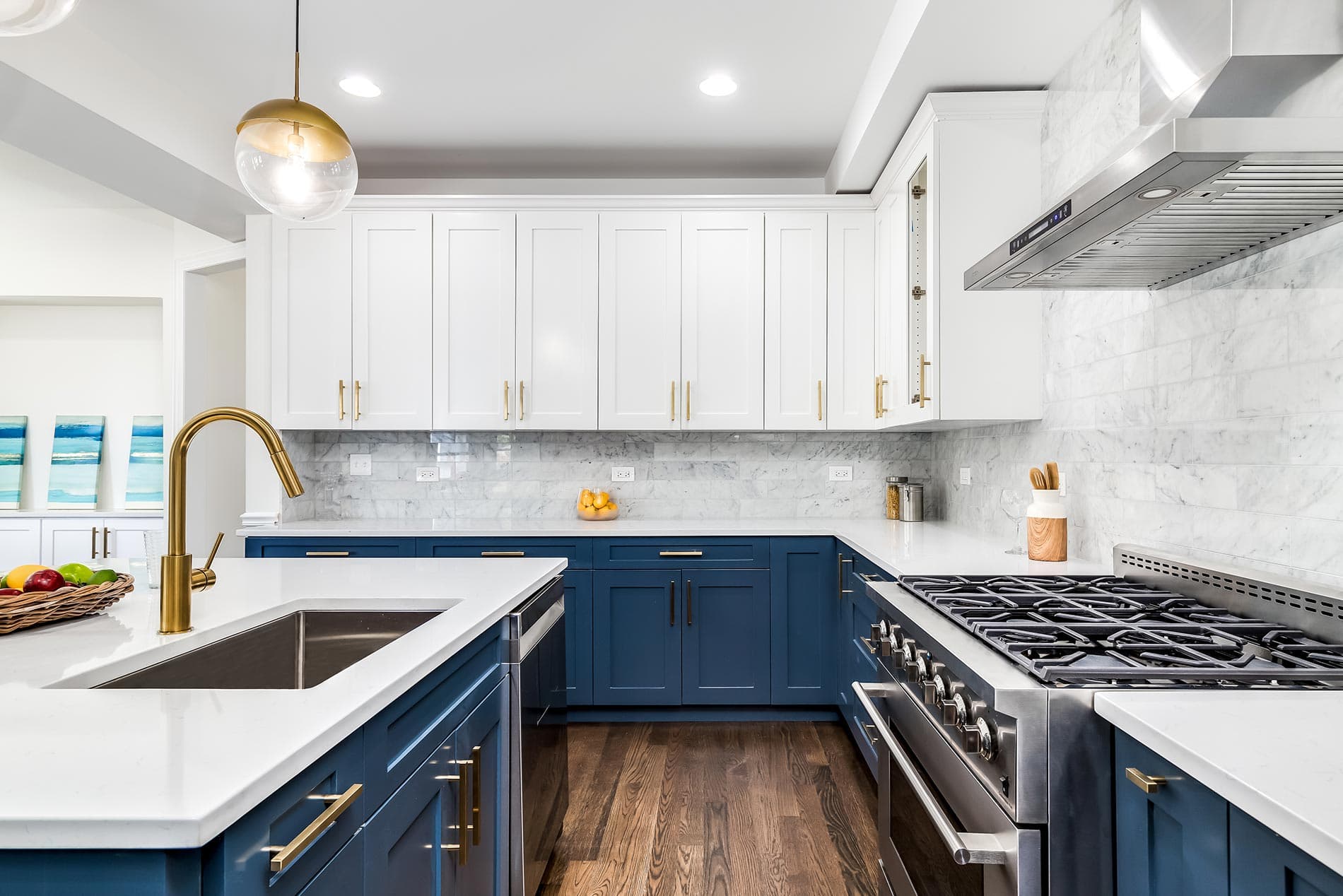
Choosing the Right Surface
The material sets the character of the counter and the way it lives day to day. Quartz is an engineered surface that is dense, non-porous, and low maintenance, which makes it a strong choice for busy kitchens because it does not need sealing and resists staining.
Granite is natural stone, so every slab is different. It brings movement and depth that an engineered surface cannot fully copy, and it holds up to heat well. It does need periodic sealing to stay its best.
Solid wood tops, often called butcher block, add warmth and are a natural fit on an island or a section of a mountain kitchen. We build them from hardwoods like maple or walnut and finish them for the use they will see. Many kitchens mix materials, with a durable perimeter and a wood island as the centerpiece.
Fabrication and Edges
The edge profile changes the whole feel of a counter. A clean square or eased edge reads modern. A slight bevel or a bullnose softens things. A mitered edge builds a thick, substantial look on the front of the slab. We walk you through the options against your cabinets and your sink so the choice fits the kitchen, not just a sample board.
Sink and cooktop cutouts are planned around your fixtures. Undermount sinks give a clean, wipe-straight-in look and are our usual recommendation with stone and quartz. Seam placement matters, so we plan seams to fall where they are least visible and where the material is best supported underneath.
Good stone work rewards good cabinets. If the base is not flat and solid, a heavy top telegraphs every high spot. That is one more reason building the cabinets and setting the tops together pays off.
Fit, Support, and Finish
Overhangs on an island or a seating bar need support so the counter does not flex or crack over time. We plan the right substrate and bracket or corbel support based on the material and the reach, before anyone stands a slab up.
We template the tops off the finished cabinets so the counter matches the real space, including walls that are not perfectly square. Then the top is cut, edged, and set, with seams tightened and joints sealed so the surface reads as one clean plane.
The finished counter should feel solid when you lean on it, wipe clean in one pass, and sit flush to the backsplash with no gaps. That is the standard we hold to, and it is why we control the cabinet and the counter together.
Common questions
- Should I choose quartz or granite?
- Quartz is engineered, non-porous, and needs no sealing, which suits people who want low maintenance and a consistent pattern. Granite is natural stone with one-of-a-kind movement and excellent heat resistance, but it should be sealed periodically. Both are durable, so the choice usually comes down to the look you want and how much upkeep you prefer.
- Can I get a wood island with a stone perimeter?
- Yes, and it is a popular combination. A durable quartz or granite perimeter takes the daily work while a solid wood island top adds warmth and becomes the centerpiece of the room. Because we build the cabinets and the wood tops in the same shop, the island wood can be matched to the cabinetry.
- How do you keep seams from showing?
- We plan seam placement during templating so joints fall where they are least visible and where the slab is well supported underneath. On site the seam is drawn tight and sealed so it reads as one surface. Level, solid cabinets underneath are a big part of getting a clean result.
Where we offer this
Start your project
Let's build something worth keeping.
Tell us about your space and we'll put together a quote. No pressure, no obligation.